Digital India has moved millions of government interactions online. But digitisation and citizen-centricity are not the same thing — and the gap between them is where most e-Governance initiatives quietly underdeliver.
The Difference Between Digitising and Redesigning
Too many e-Governance projects simply take a paper form and put it on a website — same complexity, same jargon, same number of steps, just delivered on a screen instead of at a counter. Genuine e-Governance redesigns the underlying process: fewer steps, plain language, automatic verification wherever possible, and a system built around what citizens actually need, not around how the department is internally organised.
What Good e-Governance Looks Like
- Single sign-on across services — a citizen shouldn't need a different login and identity proof for every department.
- Proactive service delivery — the system tells you when your renewal is due, rather than waiting for you to discover you missed it.
- Multiple access channels — digital-first doesn't mean digital-only; kiosks, mobile and assisted-service counters remain essential for full inclusion.
- Transparent status tracking — citizens can see exactly where their application stands, without needing to call or visit an office.
The Change Management Layer Nobody Budgets For
The hardest part of e-Governance isn't the technology — it's the frontline government staff who must now work differently. Officers who spent years mastering a paper-based process are asked to trust a new digital system, often with inadequate training and no clear incentive to change. Successful e-Governance programmes budget as much for staff change management and training as they do for the software itself.
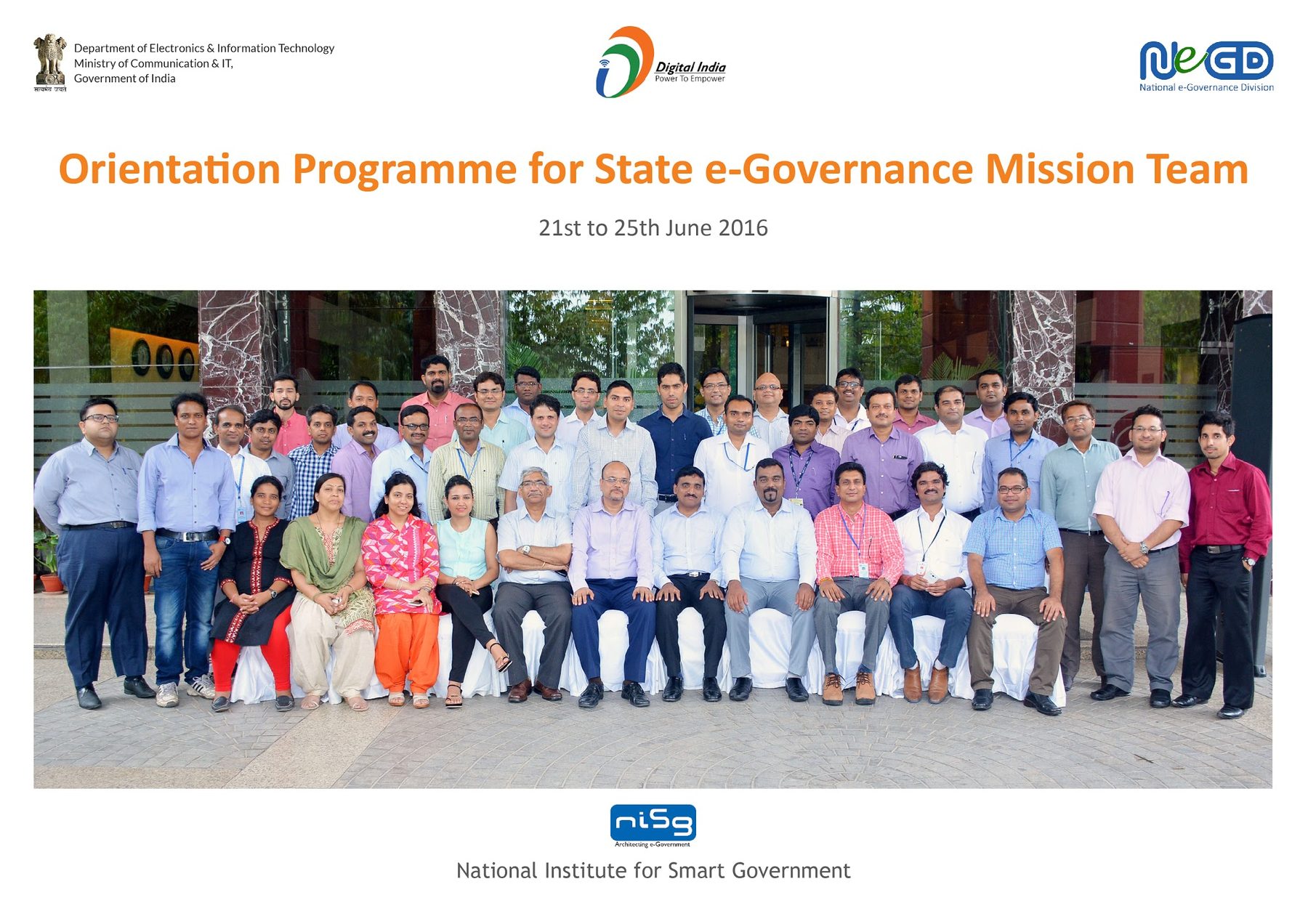
e-Governance, Delivered With People
Technology platforms only work when the people running them are trained to match.
"With deep expertise and high-impact skills, we empower government departments in delivering transformative e-Governance implementation — spanning digital identity, public service delivery and AI-powered administration." — CME Consulting
AI's Growing Role in Public Service Delivery
AI-assisted chatbots, automated document verification and predictive service demand modelling are increasingly practical for government departments — but only where the underlying process has already been simplified. Layering AI onto a badly-designed process just makes a bad process faster.
Where We've Seen This Work
Our e-Governance consulting work with state and central government departments consistently starts with process redesign and staff readiness — before any technology conversation. That sequencing, more than any specific software choice, is what determines whether citizens actually experience government as easier to deal with.